Loading Curie Briefs...
Getting the latest healthcare news for you
Getting the latest healthcare news for you

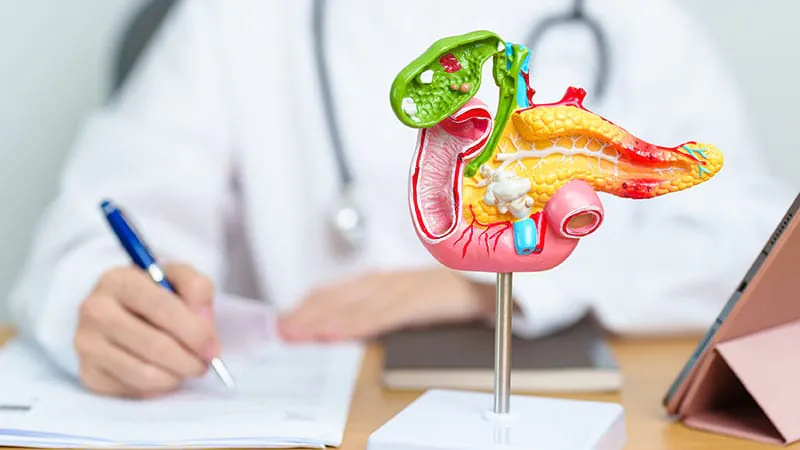
A meta-analysis of 16 studies found that endoscopic ultrasound-guided fine-needle biopsy (EUS-FNB) hits 79% diagnostic accuracy for autoimmune pancreatitis (AIP). Newer Franseen and Fork-tip needles significantly outperformed older bevel-type designs, and the procedure yielded adequate tissue in 97% of cases. It proved especially useful when imaging and lab markers alone couldn't clinch a diagnosis.
Diagnosing autoimmune pancreatitis (AIP) has long been tricky — it mimics pancreatic cancer on imaging and often requires tissue confirmation. A new systematic review and meta-analysis of 16 studies (732 patients) published in BMC Gastroenterology finds that endoscopic ultrasound-guided fine-needle biopsy (EUS-FNB) achieves a pooled diagnostic accuracy of 79%, with adequate tissue samples obtained in 97% of cases and a low adverse event rate of just 4%.
Not all needles are created equal, though. Newer Franseen and Fork-tip needles dramatically outperformed older reverse/forward-bevel designs, and the 22-gauge needle edged out larger 19G/20G options. EUS-FNB contributed to a definitive diagnosis in 69% of cases where imaging, serology, and organ involvement data were inconclusive — making it a valuable tiebreaker in complex presentations.
By the Numbers
Why it matters: AIP is a rare but treatable condition that can be mistaken for pancreatic cancer, sometimes leading to unnecessary surgery. EUS-FNB — especially with next-generation needle designs — offers clinicians a safer, more reliable way to confirm the diagnosis and spare patients from avoidable interventions.