Loading Curie Briefs...
Getting the latest healthcare news for you
Getting the latest healthcare news for you

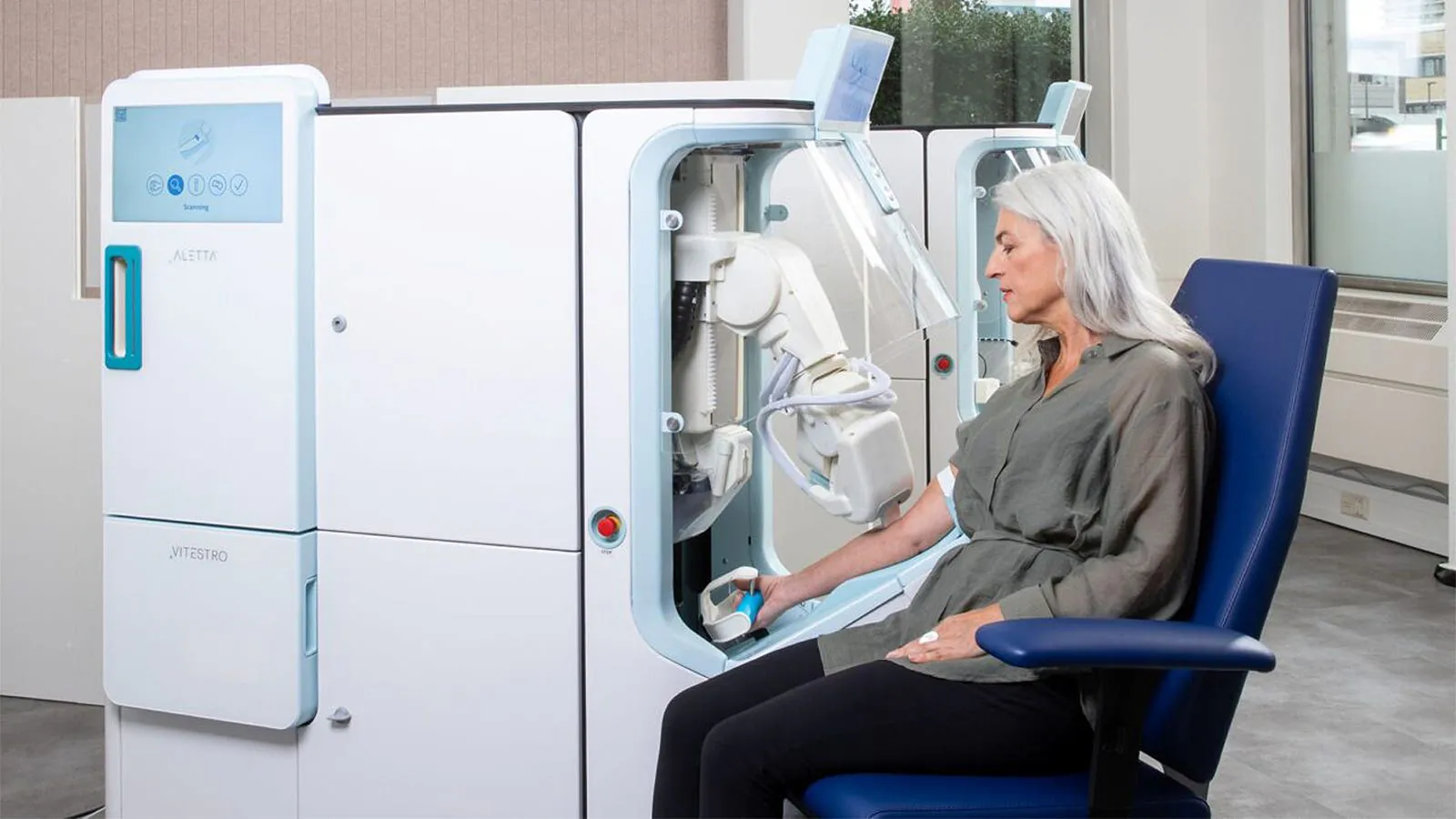
The FDA just gave the green light to the Aletta — the first robotic device that can draw blood on its own, no hands-on operator needed. Using infrared light and Doppler ultrasound to find veins, it's designed for outpatient settings under phlebotomist supervision. One phlebotomist can oversee up to three devices at once, a potential game-changer amid a growing shortage of trained blood-draw professionals.
The FDA has authorized the Aletta, the first robotic device capable of independently drawing blood from patients without a hands-on operator. The device uses near-infrared light and Doppler ultrasound to locate a suitable vein, then autonomously applies a tourniquet, preps the skin, inserts and disposes of the needle, switches collection tubes, and places a bandage — all on its own. It's cleared for use in adults in outpatient settings, with a trained phlebotomist supervising up to three devices simultaneously.
The authorization comes amid a documented and growing shortage of phlebotomists in the U.S., where blood draws rank among the most commonly performed medical procedures. Safety features include automatic needle detachment if a patient moves too much and onboard sensors that can halt the procedure if unsafe conditions are detected.
By the Numbers:
Why it matters: With phlebotomist shortages creating delays in routine care, the Aletta could meaningfully expand access to a foundational diagnostic procedure — while maintaining strong safety and patient satisfaction outcomes.


