Loading Curie Briefs...
Getting the latest healthcare news for you
Getting the latest healthcare news for you

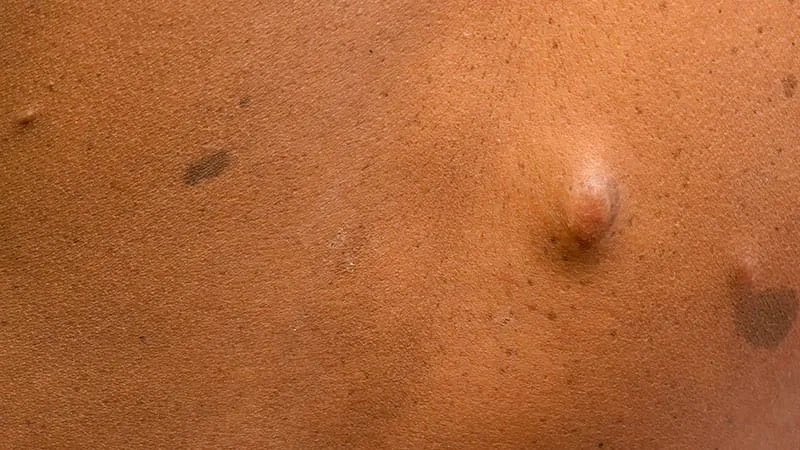
Spots with a story: A new study finds that cherry angiomas — those small red skin bumps most people brush off as harmless — are significantly more common in people with neurofibromatosis type 1 (NF1). Researchers traced the cause to a "two-hit" loss of the NF1 gene in vascular skin cells, revealing cherry angiomas as a previously unrecognized vascular manifestation of the condition. The findings could reshape how clinicians understand and monitor NF1-related vascular complications.
Spots with a story
Cherry angiomas (CAs) — those small red or purple skin bumps often considered harmless — turn out to be far more common in people with neurofibromatosis type 1 (NF1) than in the general population. A prospective study published in JAMA Dermatology found that nearly half of NF1 patients had CAs, compared to just 18% of controls — a striking tenfold difference in adjusted odds.
The research team didn't stop at counting bumps. They dug into the genetic mechanisms behind them, finding that two-thirds of NF1-associated CAs carried a second, somatic loss-of-function hit in the NF1 gene — the classic "two-hit" tumor suppressor mechanism. Endothelial cells and telocytes (specialized connective tissue cells) were identified as the key cell types driving lesion formation, with elevated RAS-pathway signaling confirmed by fluorescent staining.
By the Numbers
Why it matters: These findings reframe cherry angiomas as a bona fide vascular manifestation of NF1, not just a coincidental finding. For clinicians, this opens a new window into NF1-related vascular disease and may inform how other NF1-associated vasculopathies are understood and managed.