Loading Curie Briefs...
Getting the latest healthcare news for you
Getting the latest healthcare news for you

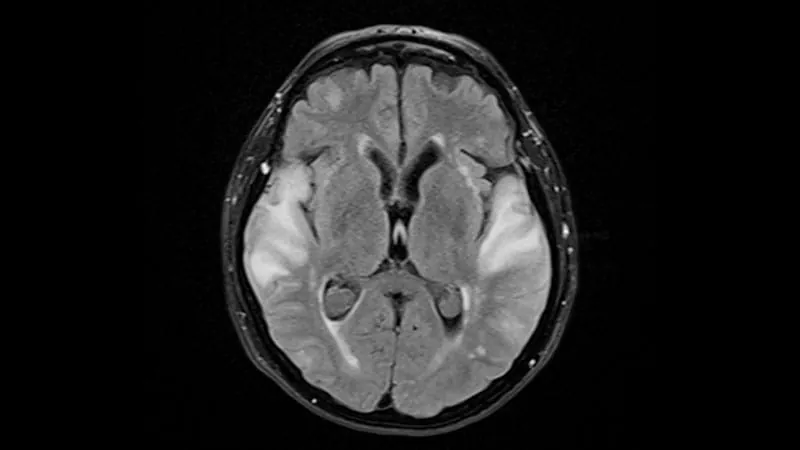
A genetic red flag that isn't quite a crystal ball. A real-world study of 230 Alzheimer's patients on lecanemab found that carrying two copies of the APOE ε4 gene dramatically raises the odds of developing amyloid-related imaging abnormalities (ARIA) — but the gene alone can't reliably predict who will actually get them. Clinicians are left counseling patients on statistical risk without a reliable individual-level tool.
A genetic red flag that isn't quite a crystal ball
Lecanemab, the FDA-approved Alzheimer's drug, slows cognitive decline — but it comes with a notable side effect: amyloid-related imaging abnormalities (ARIA), which include brain swelling and microhemorrhages. A new real-world study published in Neurology Open Access set out to determine whether the APOE ε4 gene could help predict who's at risk. The short answer: it helps, but not enough.
In a retrospective study of 230 lecanemab-treated patients at a single academic center, 24.3% developed ARIA. APOE ε4 homozygotes (two copies of the gene) faced nearly 5x higher odds of brain swelling and ~4x higher odds of microhemorrhages compared to non-carriers. Despite this, the overall predictive model had an AUC of just 0.58 — barely better than a coin flip. Encouragingly, cognitive scores at 12 months showed no significant difference between those who developed ARIA and those who didn't.
By the numbers
Why it matters: Clinicians currently have no reliable tool to identify which individual patients will develop ARIA before starting lecanemab. Researchers suggest future models using machine learning — combining neuroimaging, fluid biomarkers, and cardiovascular risk factors — may offer a more personalized approach to risk assessment.