Loading Curie Briefs...
Getting the latest healthcare news for you
Getting the latest healthcare news for you

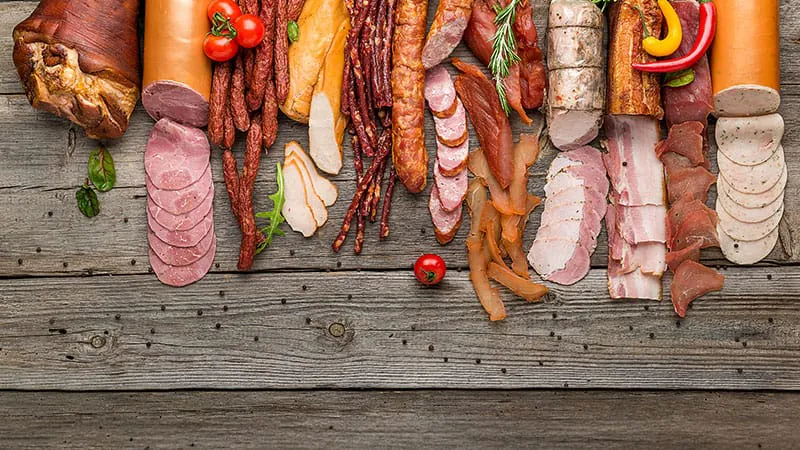
A 20-year Swedish study found that men with higher dietary nitrite intake — largely from meat — had a 23% greater risk of colorectal cancer overall, and a 50% higher risk for distal colon cancer specifically. Women showed no such association, even though processed meats were also a major nitrite source for them. Researchers say more work is needed to understand the sex-based difference.
A sweeping 20-year study out of Sweden has found a significant link between dietary nitrite intake and colorectal cancer — but only in men. Analyzing data from over 82,000 middle-aged and older adults, researchers tracked nitrate and nitrite consumption through repeated food frequency questionnaires and linked findings to national cancer registry data spanning 1998–2022.
Among men, meat was the dominant source of nitrite (roughly half of total intake, with processed meats alone contributing 26%), while women got the majority of their nitrite from vegetables (68%). Despite similar processed meat consumption between sexes, only men showed elevated cancer risk — suggesting diet composition alone doesn't explain the disparity.
By the Numbers:
Why it matters: Nitrites — common in cured and processed meats — can form N-nitroso compounds in the body, some of which are known animal carcinogens. This study adds long-term, population-level evidence that nitrite exposure may be a meaningful, modifiable risk factor for colon cancer in men, reinforcing dietary guidance to limit processed meat consumption.