Loading Curie Briefs...
Getting the latest healthcare news for you
Getting the latest healthcare news for you

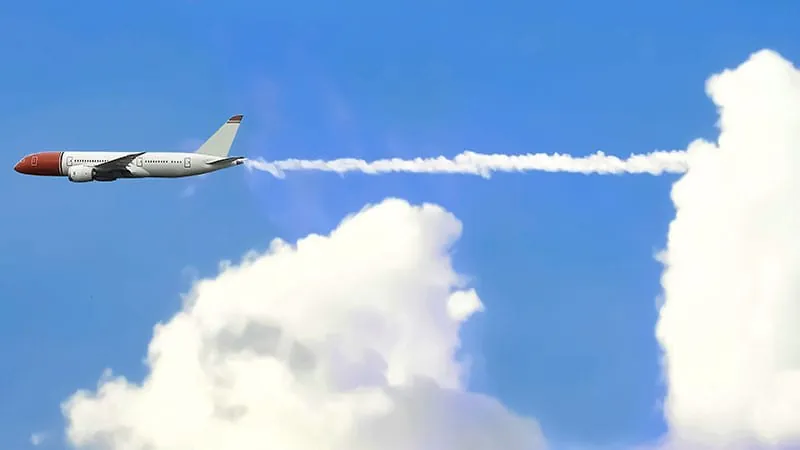
As record heatwaves kill thousands across Europe, scientists are debating a radical climate fix — spraying reflective particles into the stratosphere to cool the planet. But experts warn the health risks are largely unknown, the research is heavily funded by tech billionaires, and no global governance framework exists to manage the consequences.
Europe's brutal summer — five heatwaves, over 10,000 deaths in June alone, and healthcare systems near collapse — has reignited debate over a controversial planetary intervention: stratospheric aerosol injection (SAI). The idea involves spraying reflective nanoparticles into the stratosphere to mimic the cooling effect of volcanic eruptions. Climate models suggest it could prevent 400,000+ heat-related deaths annually by 2080 and reduce respiratory deaths by ~67,000/year. Promising on paper — but the broader scientific community remains deeply skeptical.
Critics argue the research landscape is skewed. Private funding for solar geoengineering grew from under $6M in 2020 to ~$120M in 2025, with over 70% coming from philanthropists and venture capital with strong ties to the technology sector. Meanwhile, research into SAI's potential harms — toxicology, disease redistribution, ecological disruption — remains chronically underfunded. More than 600 scientists have signed a call for an International Non-Use Agreement on Solar Geoengineering.
By the Numbers:
Why it matters: Solar geoengineering isn't just a climate question — it's a public health and governance challenge. Without independent health impact assessments, equitable global oversight, and funding transparency, deploying SAI could trade one set of climate risks for a host of unpredictable new ones. Experts stress it must never be treated as a substitute for decarbonization.


