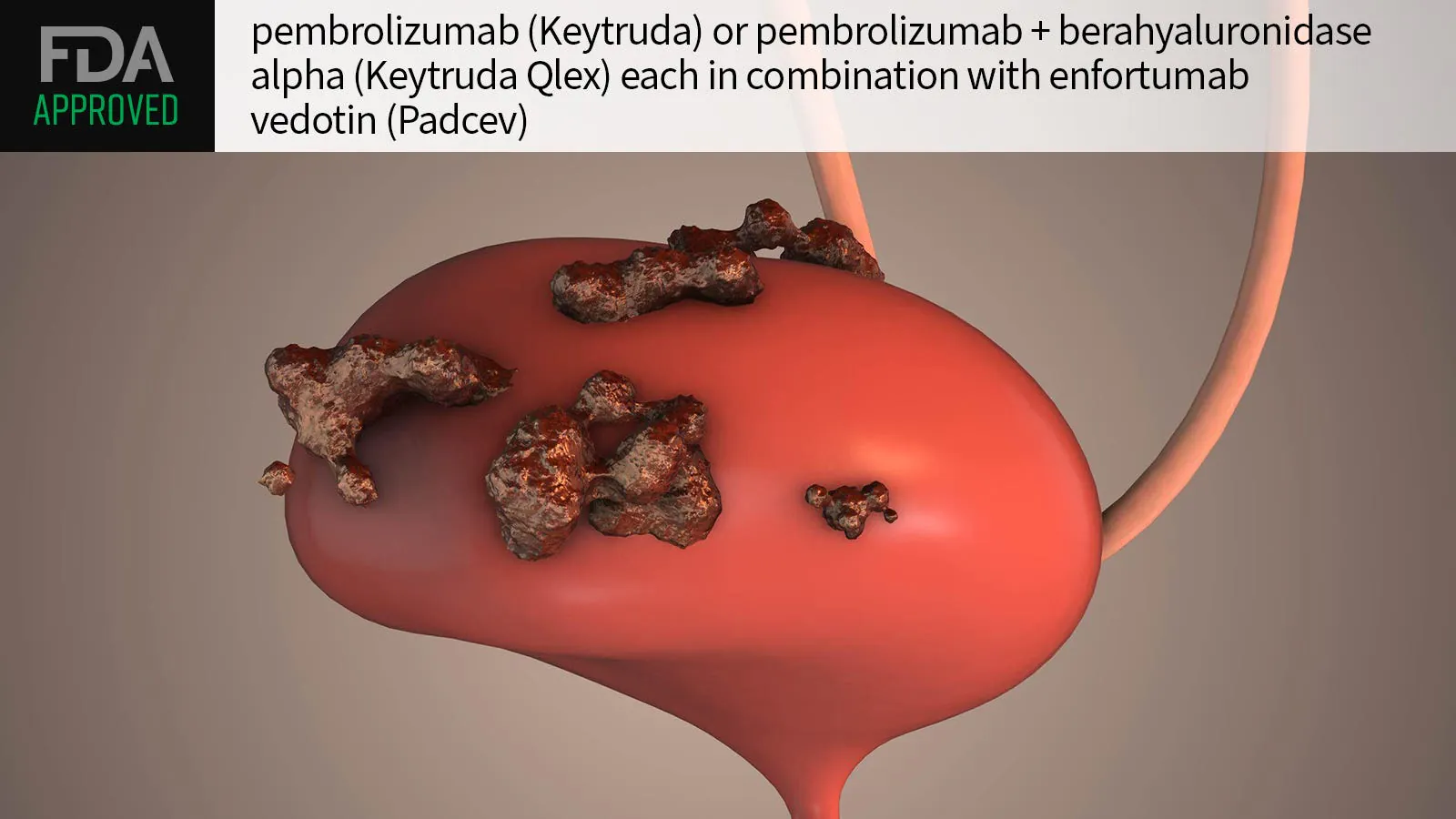
The FDA has broadened approval of pembrolizumab (Keytruda) plus enfortumab vedotin (Padcev) as perioperative treatment for all adults with muscle-invasive bladder cancer (MIBC) undergoing cystectomy — no longer limited to those ineligible for cisplatin. The expanded approval, based on the phase 3 KEYNOTE-B15/EV-304 trial, showed the combo cut the risk of death by 35% and significantly improved event-free survival versus standard gemcitabine-cisplatin chemotherapy.
The FDA has expanded the indication for pembrolizumab (Keytruda) plus enfortumab vedotin (Padcev) as perioperative treatment — covering both the neoadjuvant and adjuvant phases — for all adults with muscle-invasive bladder cancer (MIBC) who are candidates for radical cystectomy. Previously, this regimen was only approved for patients ineligible for cisplatin-based chemotherapy. The decision was announced July 10 and received priority review, clearing the FDA's target action date by about five weeks.
The expanded approval is grounded in results from the phase 3 KEYNOTE-B15/EV-304 trial, which enrolled 808 cisplatin-eligible MIBC patients. The pembrolizumab-enfortumab vedotin combination outperformed gemcitabine-cisplatin on both primary and secondary endpoints, with no new safety signals identified.
By the Numbers:
Why it matters: This approval positions pembrolizumab plus enfortumab vedotin as a potential new standard of care for MIBC — offering a chemotherapy-free perioperative option that meaningfully reduces recurrence risk and improves survival across a broader patient population.