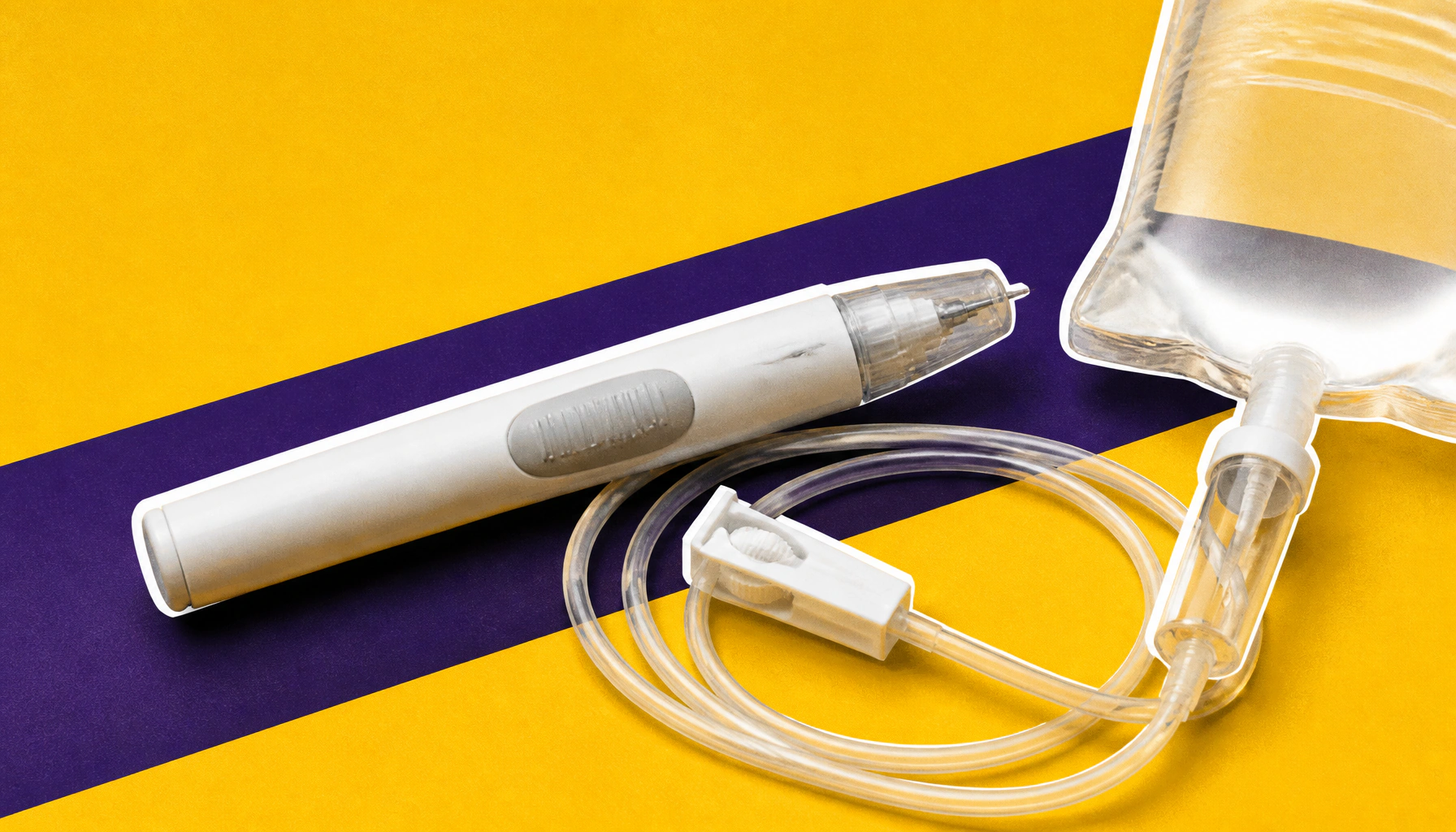
The cheaper, off-label option holds its own. A phase 3 trial (OVERLORD-MS) found that rituximab was noninferior to ocrelizumab in preventing new MRI lesions in newly diagnosed relapsing multiple sclerosis patients over 2 years. Relapse rates, disability progression, and safety profiles were similar — and rituximab costs significantly less, which could have major implications for healthcare systems worldwide.
The cheaper, off-label option holds its own in MS
The phase 3 OVERLORD-MS trial has delivered the first head-to-head randomized evidence comparing rituximab and ocrelizumab in newly diagnosed relapsing multiple sclerosis — and the results favor the more affordable option. Across 216 patients in Norway and Sweden, rituximab proved noninferior to ocrelizumab in preventing new or enlarging T2-weighted MRI lesions between months 6 and 24 of treatment.
Relapse rates, disability progression, and cognitive outcomes were all comparable between the two anti-CD20 therapies. Infections were more common with rituximab (82% vs. 69%), but serious adverse events were nearly identical (8% vs. 7%), and no opportunistic infections were reported in either group.
By the Numbers:
Why it matters: Rituximab is substantially cheaper than ocrelizumab in many countries. If widely adopted as a first-line MS therapy, it could free up significant healthcare resources without sacrificing treatment effectiveness — a meaningful shift for both patients and health systems globally.