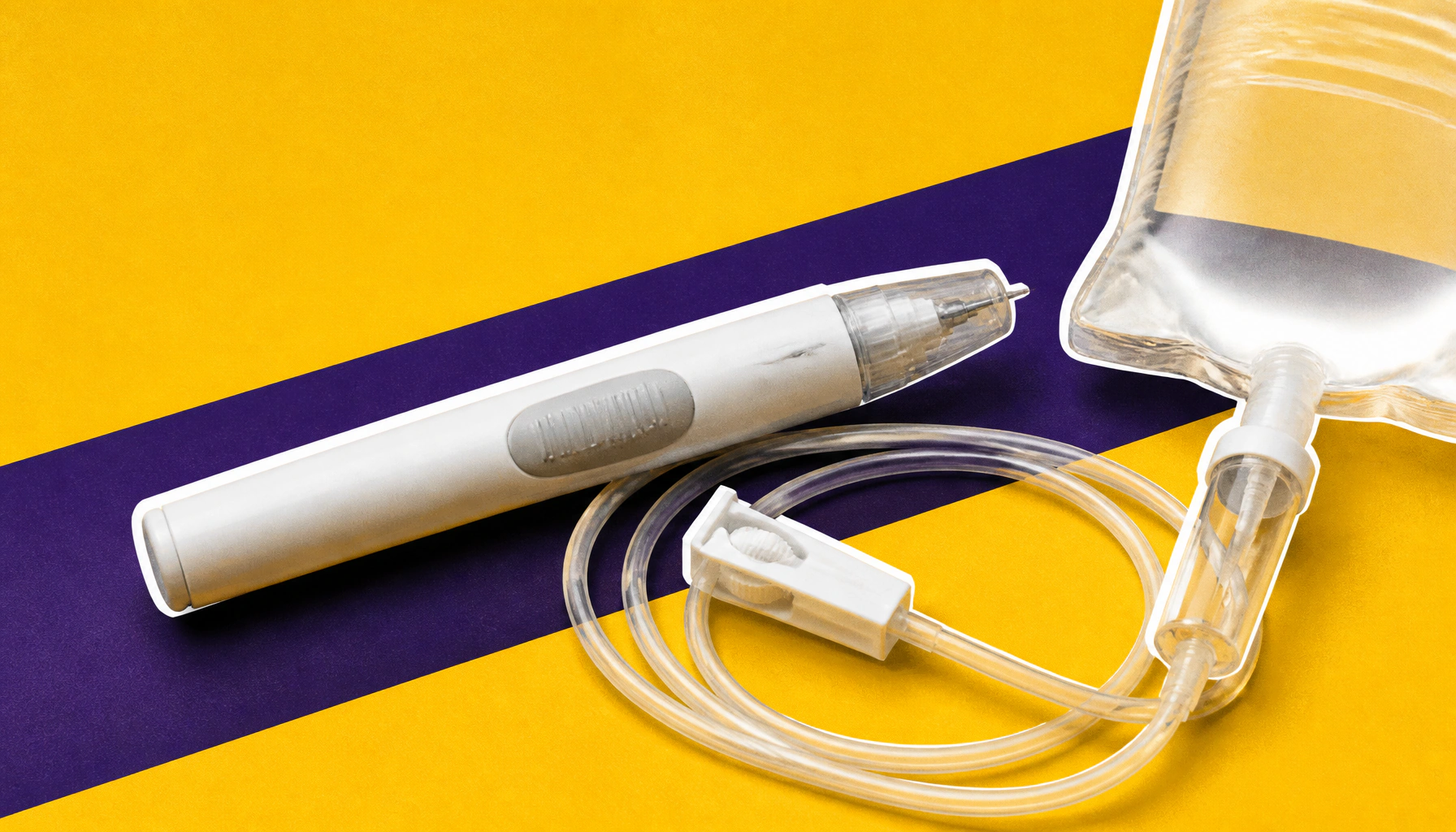
A new at-home option for Alzheimer's treatment is showing real promise. Data from the phase 3 Clarity AD trial found that subcutaneous (under-the-skin) lecanemab injections are just as effective as intravenous infusions — and patients overwhelmingly prefer them. The FDA is now weighing approval of a 500 mg subcutaneous initiation dose, with a decision expected by August 24.
Good news for Alzheimer's patients who dread the infusion center: subcutaneous lecanemab (Leqembi) works just as well as the IV version — and it takes about 10 seconds instead of an hour. Data presented at the Alzheimer's Association International Conference 2026 in London showed that weekly 500 mg autoinjector doses were bioequivalent to biweekly 10 mg/kg IV doses, with comparable amyloid reduction, clinical benefit, and safety profiles.
The convenience factor is a big deal. Patients can self-administer the shot at home — similar to how GLP-1 or migraine autoinjectors work — reducing the planning burden for both patients and clinicians. In a retrospective survey of 28 patients who switched from IV to subcutaneous dosing, 97% reported "favorable" or "very favorable" experiences, and 94% said they'd "definitely" recommend it.
Key Takeaways:
Why it matters: Subcutaneous lecanemab could dramatically lower the access and logistical barriers to Alzheimer's treatment, making it feasible for more patients — including older adults and those in earlier disease stages — to stay on therapy long-term.