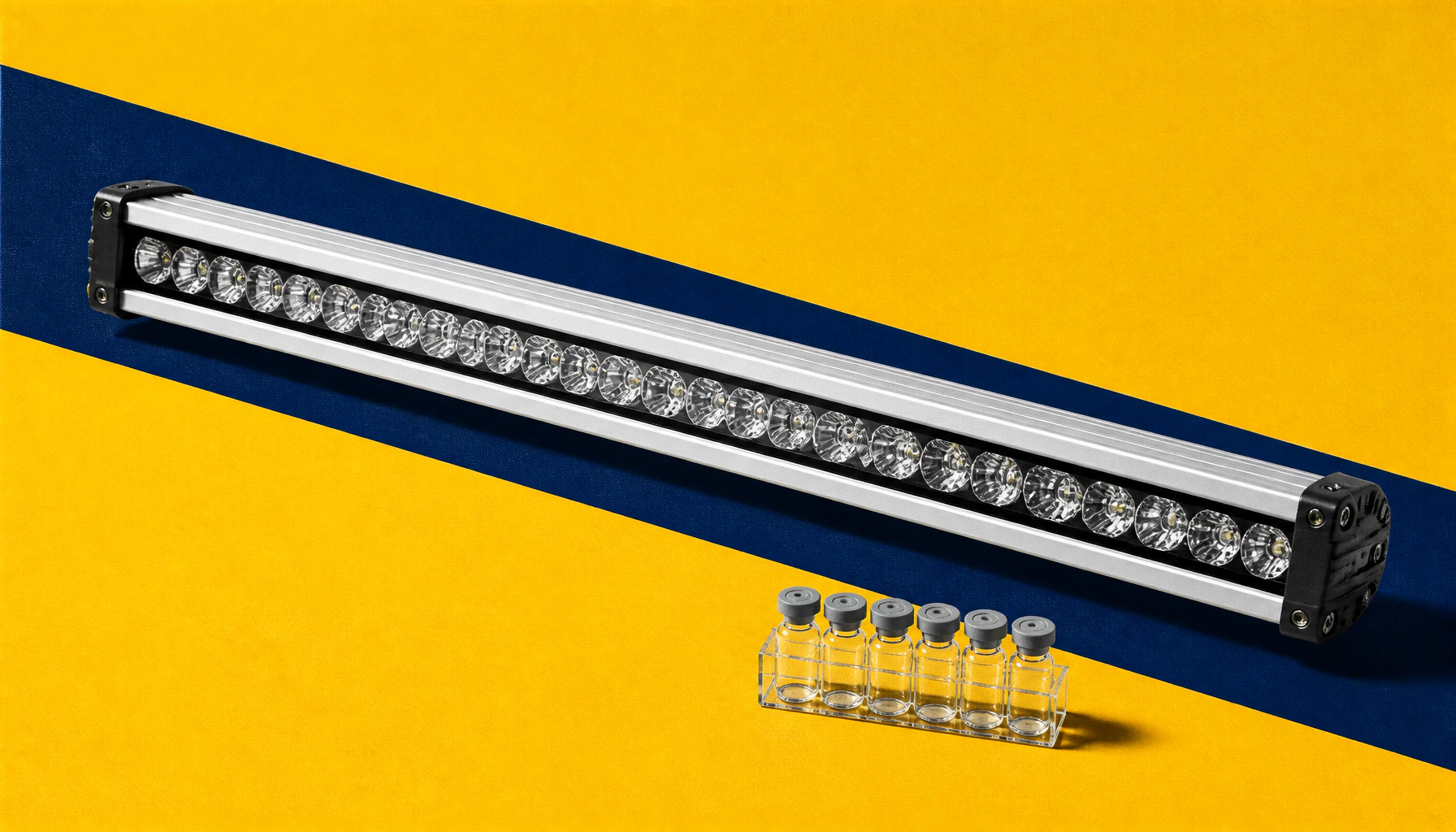
Researchers at the University at Buffalo have found that simple blue LED lights — the kind used in fish tanks and indoor gardens — can help chemists build more complex drug molecules in fewer steps. By pairing the lights with a catalyst and common chemical building blocks, the team was able to modify two neighboring carbon atoms in a single reaction instead of the usual one. The method could speed up drug discovery and unlock harder-to-reach therapeutic targets.
Researchers at the University at Buffalo have discovered that off-the-shelf blue LED lights — yes, the same ones used in fish tanks and indoor gardens — can help chemists build more complex drug molecules in significantly fewer steps. Published in Science, the study shows how pairing blue LEDs with a light-activated catalyst and common carbon-halogen building blocks allows chemists to modify two adjacent carbon atoms in a single reaction, rather than the typical one.
The approach is gentler than traditional photochemical methods that rely on high-energy UV light, which can degrade the very molecules being synthesized. The team conducts reactions inside custom compartments they've dubbed "Buffalo boxes," where blue LEDs activate the catalyst in each vial.
Key Takeaways:
Why it matters: More complex, three-dimensional drug molecules tend to be more potent and selective in the body — but they're expensive and time-consuming to make. This technique could give drug developers a faster, cheaper path to molecules capable of tackling some of medicine's toughest challenges.