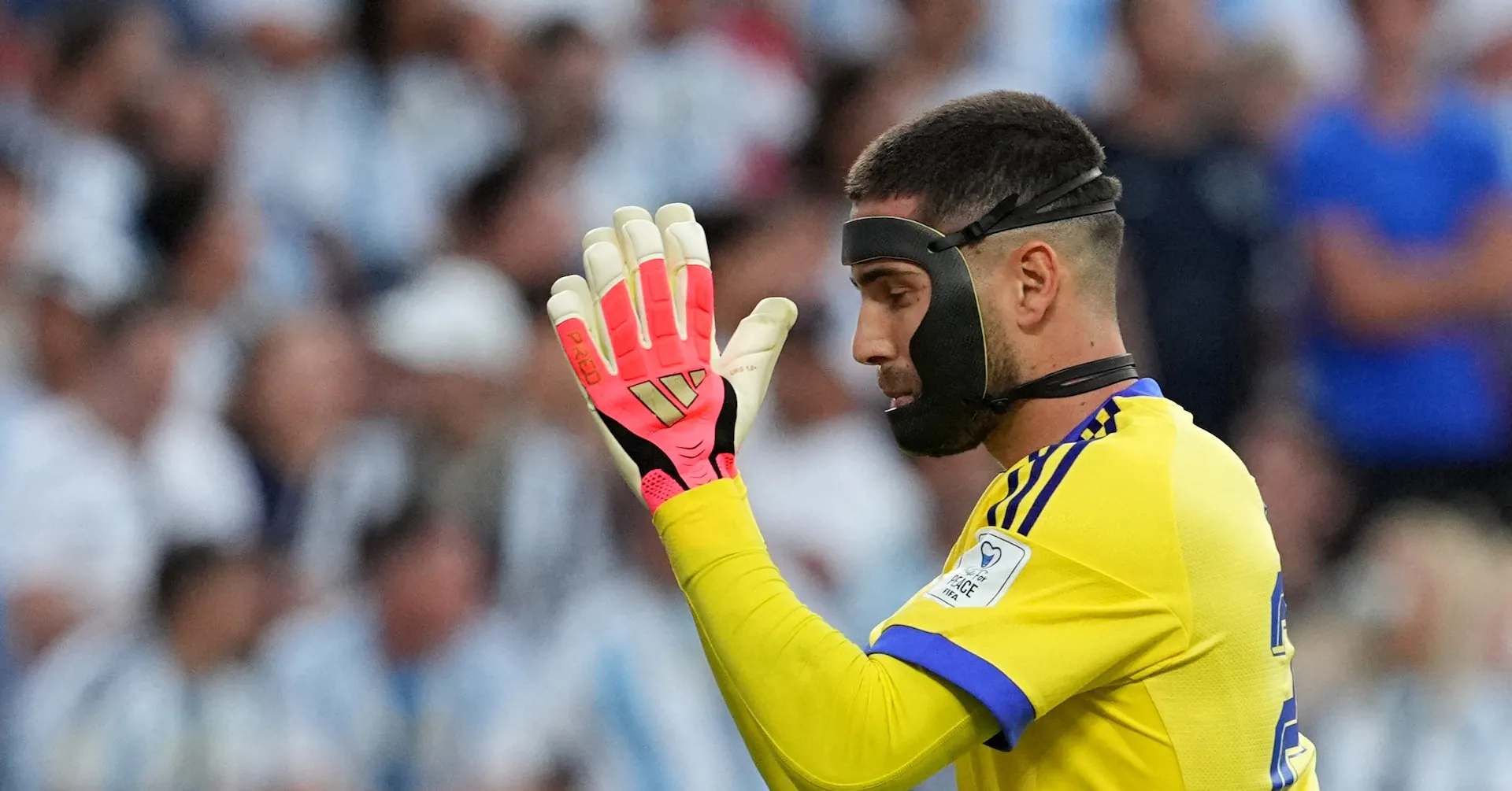
Masked World Cup players are shining a light on one of soccer's most underestimated injuries — the broken nose. While it may look minor, a nasal fracture can cause chronic breathing problems, deviated septums, and long-term performance impacts if not properly treated. Surgeons warn that the force of an elbow or shoulder to the face at elite speed is comparable to taking a punch in combat sports.
The sight of masked players at the 2026 World Cup — including England's Djed Spence, Austria's Stefan Posch, and Algeria's Luca Zidane — is drawing attention to a frequently overlooked injury in soccer: the nasal fracture. While a broken nose might seem like a minor setback, facial plastic surgeon Dr. Farhad Ardesh warns it can cause lasting damage well beyond the visible swelling or crookedness.
"Sometimes a minor injury on the outside can cause major damage on the inside," said Ardesh, who has treated professional athletes. An internal S-shaped or zigzag deformity can severely restrict airflow — a critical issue for elite athletes whose performance depends on optimal breathing. The impact forces involved are significant; a shoulder or elbow to the face at full sprint is, in his words, "more or less like taking a right hook to the face."
Key Takeaways:
Why it matters: Nasal injuries in soccer are routinely undertreated, yet they can have lasting consequences on both breathing and athletic performance. As high-profile cases put protective masks in the spotlight, clinicians and sports medicine teams are being reminded to take facial trauma seriously — not just cosmetically, but functionally.