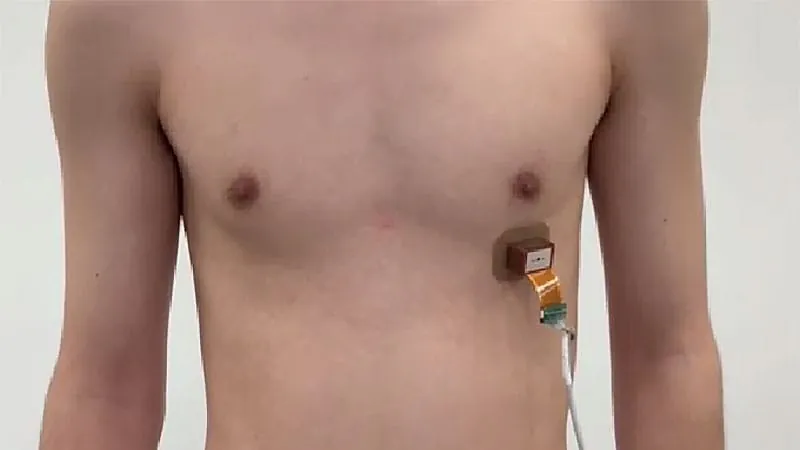
A postage-stamp-sized patch worn on the chest may one day replace implanted pacemakers. MIT researchers developed a noninvasive ultrasound device that restored normal heart rhythms in animal models and engineered human heart cells — with no significant side effects over 8 months. The catch? It requires genetic modification of cardiac cells first, meaning human trials are still years away.
Pacemakers have always had one thing in common: they go inside the body. MIT researchers are challenging that with a wearable, noninvasive pacemaker — a hydrogel patch embedded with tiny ultrasound transducers that sticks to the chest and stimulates the heart from the outside. Published in Nature Biomedical Engineering, the study showed the device could synchronize contractions in engineered human heart cells, restore normal rhythms in animal models, and achieve chamber-specific pacing with submillimeter precision — all with a clean safety profile over 8 months of follow-up.
The secret sauce is sonogenetics — a field that uses genetic engineering to make cells more responsive to sound. The team introduced a mechanosensitive ion channel into human cardiomyocytes, making them "hear" ultrasound pulses and contract on cue. The device also showed promise in ex vivo porcine hearts, suggesting it could scale to human-sized anatomy.
Key Takeaways:
Why it matters: If the gene delivery challenge can be solved, this technology could eliminate the infection, bleeding, and scarring risks tied to implanted hardware — fundamentally reimagining how we manage heart rhythm disorders.