Gluteal tendon tears — often called the "rotator cuff of the hip" — can be repaired either open or endoscopically, but the best approach depends on tear size and surgeon comfort. For large, retracted, full-thickness tears, most experts lean toward open repair for its greater versatility and faster setup. Both techniques show comparable outcomes, though open surgery may offer more options when grafting or reconstruction is needed.
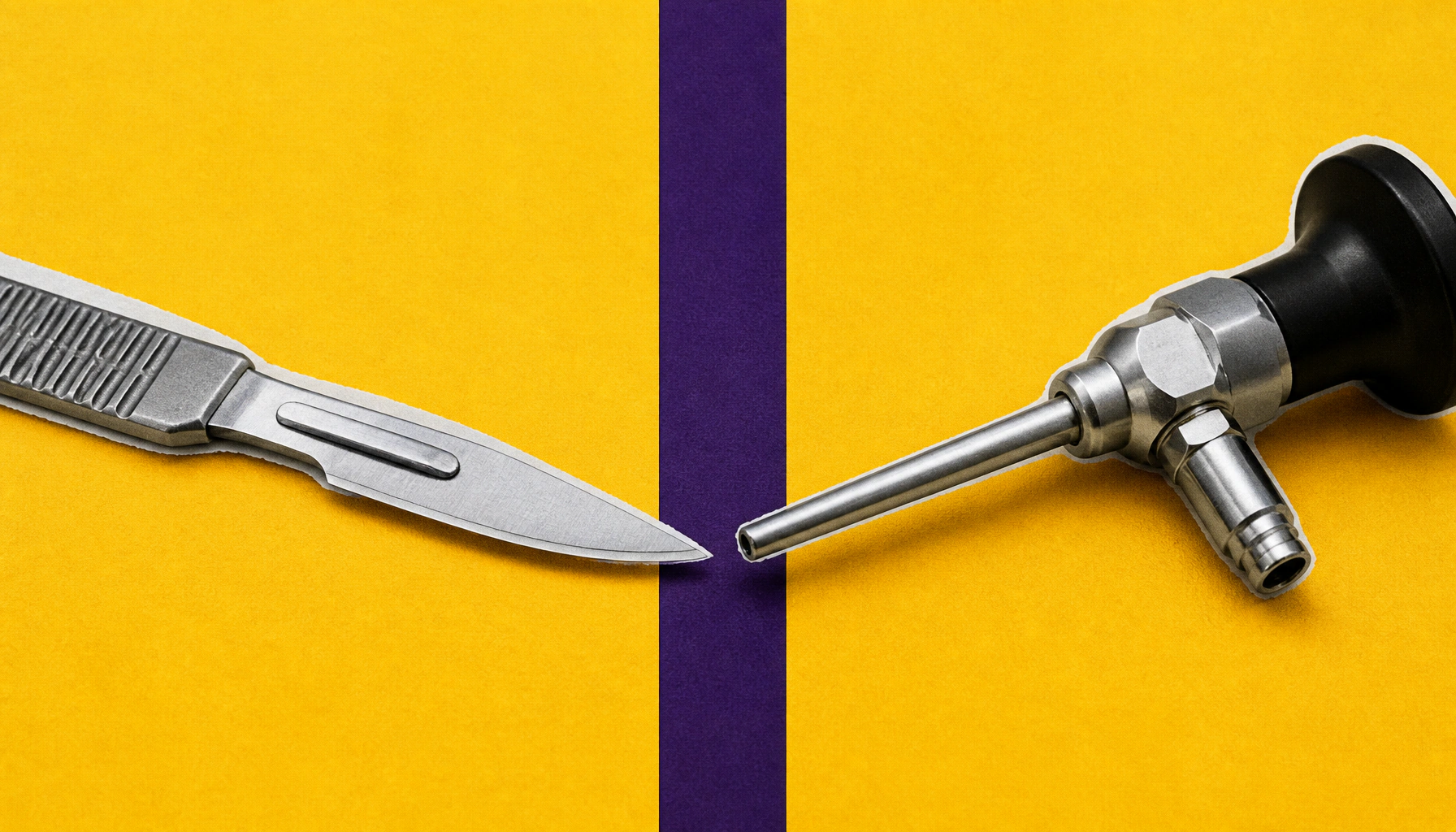
Gluteal tendon tears, sometimes called the "rotator cuff of the hip," affect mostly women aged 40–70 and are among the most misdiagnosed injuries in and around the hip. Once nonoperative treatments like physical therapy and injections fail, surgery becomes necessary — and surgeons must choose between two approaches: endoscopic or open repair.
For smaller or partial-thickness tears, endoscopic surgery is generally preferred, offering better visualization, lower blood loss, and the ability to address concomitant hip pathology simultaneously. But for large, retracted, full-thickness tears, the tide is shifting toward open repair. Open surgery allows for more complex suture patterns, easier graft augmentation, faster operative time, and greater versatility if reconstruction is needed — key advantages given that gluteal tendons are often of poor quality due to chronicity and repeated corticosteroid injections.
Key Takeaways:
Why it matters: With gluteal tendon tears frequently misdiagnosed as bursitis, greater awareness and clearer surgical guidance are critical. Choosing the right approach — tailored to tear severity and surgeon skill — can meaningfully improve patient recovery and reduce complications.