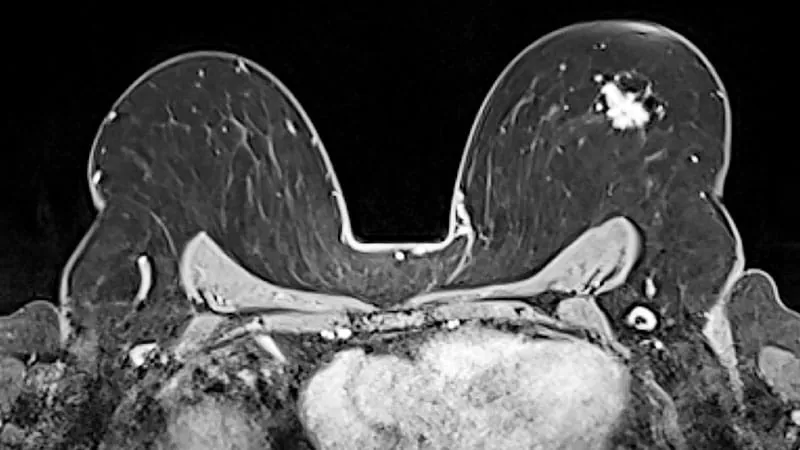
A new imaging biomarker may help predict breast cancer risk in BRCA mutation carriers. A retrospective study found that higher background parenchymal enhancement (BPE) on breast MRI was linked to a significantly increased risk of developing breast cancer among women with BRCA1/2 mutations. Researchers say BPE could become a dynamic, modifiable tool to personalize cancer prevention strategies.
A new study suggests that a measurable MRI signal — called background parenchymal enhancement (BPE) — could help predict breast cancer risk in women who carry BRCA1/2 mutations. Researchers at the University of Pennsylvania analyzed 1,278 breast MRIs from 385 women with BRCA1/2 pathogenic variants over a 20-year period, finding that higher quantitative BPE was significantly associated with increased cancer risk, even after adjusting for age, BMI, breast density, and menopausal status.
The findings also revealed that BPE levels dropped meaningfully after oophorectomy — a risk-reducing surgery — suggesting BPE may reflect hormonal influences on breast tissue and could serve as a real-time marker of residual cancer risk post-surgery.
By the Numbers:
Why it matters: For BRCA mutation carriers, personalized risk assessment is critical. BPE could give clinicians a dynamic, modifiable biomarker to fine-tune screening schedules and prevention strategies — going beyond static measures like mammographic density.