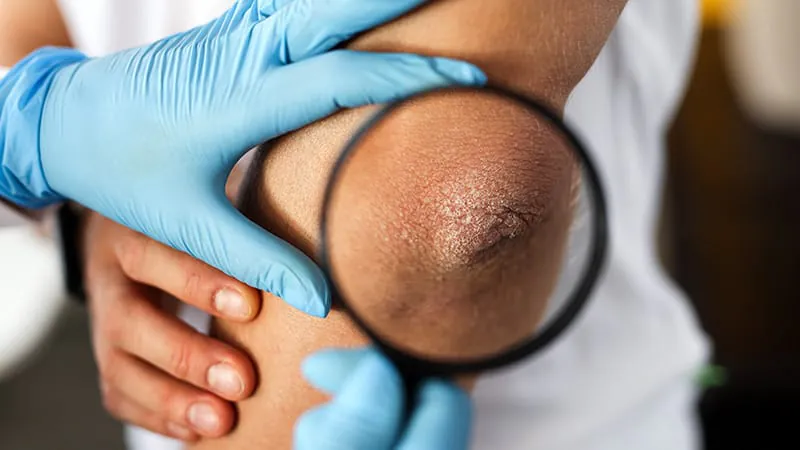
GLP-1 medications like semaglutide and tirzepatide are showing surprising benefits for inflammatory skin conditions — and researchers now believe the drugs may be acting directly on skin inflammation, independent of weight loss. Psoriasis plaques clearing within days of starting a GLP-1 drug sparked the investigation, and genetic studies, clinical trials, and the National Psoriasis Foundation have all added weight to the theory. Dedicated clinical trials testing GLP-1s for skin disease alone are now on the horizon.
GLP-1 receptor agonists — the blockbuster class behind drugs like Ozempic and Zepbound — are turning heads in dermatology. Clinicians began noticing psoriasis plaques "melting away" within just two days of patients starting a GLP-1, far too fast to be explained by weight loss alone. That observation has since been backed by a growing body of research suggesting these drugs may directly target skin inflammation through GLP-1 receptors present in skin tissue.
A genetic study found that people predisposed to more active GLP-1 receptors had significantly lower rates of psoriasis and psoriatic arthritis — even after controlling for body fat. The landmark TOGETHER-PsO trial showed that combining tirzepatide with the IL-17 inhibitor ixekizumab outperformed ixekizumab alone for skin clearance, and the National Psoriasis Foundation has now formally endorsed considering GLP-1s as adjunctive therapy for patients with psoriasis and metabolic comorbidities. Beyond psoriasis, early evidence points to potential benefits in hidradenitis suppurativa, atopic dermatitis, and wound healing.
Key Takeaways:
Why it matters: This research is reshaping how dermatologists think about skin disease — from a surface-level problem to a systemic inflammatory condition. If GLP-1s prove effective as standalone skin therapies in upcoming clinical trials, it could open a new treatment pathway for millions of patients with psoriasis and other inflammatory skin disorders.