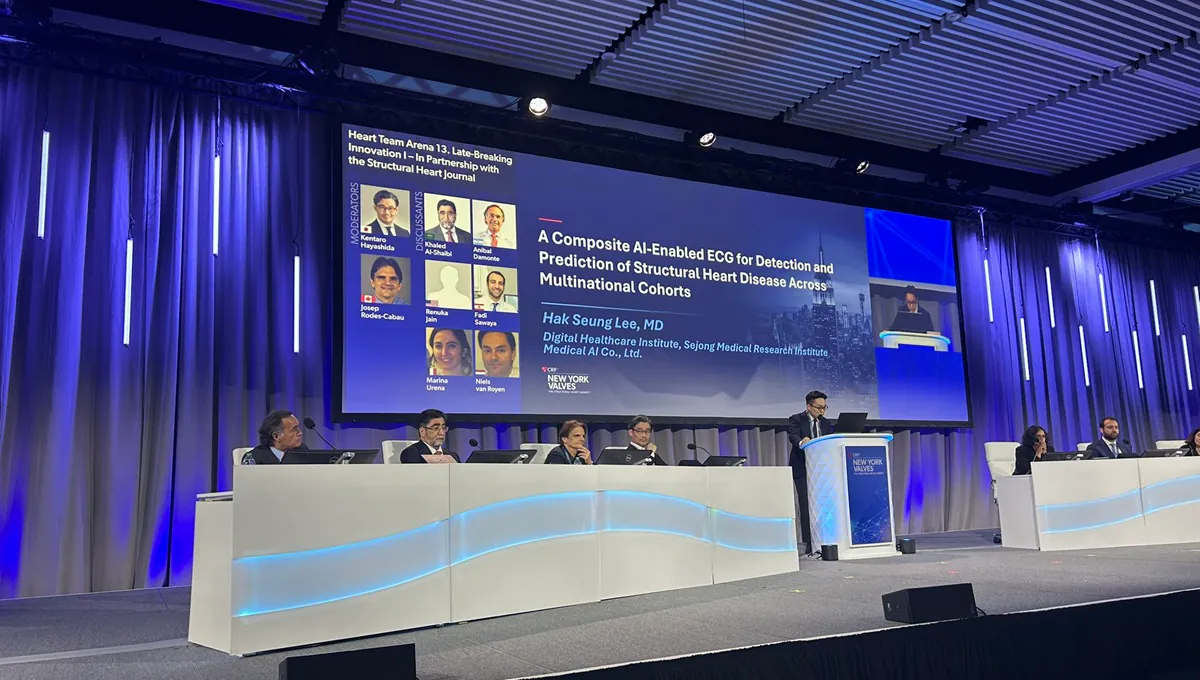
AI-enhanced ECGs are proving their worth in spotting structural heart disease (SHD) that often goes undetected. A new multinational study found that composite AI-ECG models could identify patients with SHD across diverse populations—and those who tested positive were up to 3.75 times more likely to develop new-onset SHD within 6 years. Experts say the technology could be a game-changer, especially where echocardiography access is limited.
AI-enhanced ECGs are proving their worth in spotting structural heart disease (SHD) that often goes undetected. A new multinational study presented at New York Valves 2026 found that composite AI-ECG models—combining signals for left ventricular systolic and diastolic dysfunction—could identify patients with prevalent SHD and predict who's at risk of developing it, across three large cohorts totaling over 120,000 individuals in South Korea, the US, and the UK.
The composite tool demonstrated sensitivity of 71.8%–76.1% for detecting SHD and showed consistent performance across four SHD subtypes, including reduced ejection fraction, valvular disease, LV hypertrophy, and pulmonary hypertension. Researchers noted the LVSD and LVDD model signals were complementary, together capturing the full SHD spectrum. Experts acknowledged that while the models outperformed physicians in some instances, questions around missed cases and clinical accountability still need to be worked through as a community.
By the Numbers:
Why it matters: Echocardiography is the gold standard for diagnosing SHD but remains costly and access-limited. AI-ECG tools—already clinically deployed in South Korea—could serve as a scalable, low-cost screening layer to flag high-risk patients for follow-up imaging, particularly in underserved settings. Prospective trials and RCTs are now in the pipeline for the US and South Korea.