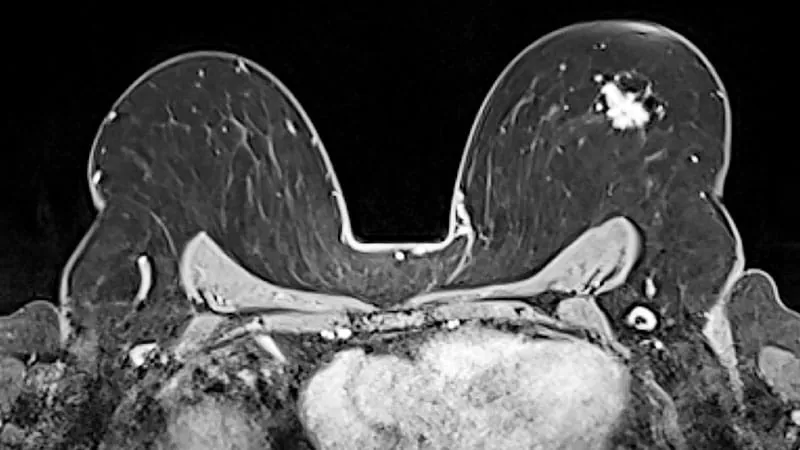
Women with invasive lobular carcinoma (ILC) who carry certain inherited gene variants face a nearly fourfold higher risk of early cancer recurrence, a new study finds. Researchers analyzed 113 cancer-predisposition genes in 414 ILC patients and found those with moderate- to high-risk variants had dramatically worse 5-year survival outcomes. The findings could reshape how clinicians monitor and treat this breast cancer subtype.
A new prospective study published in JAMA Network Open reveals that inherited gene mutations may be a powerful predictor of early relapse in women with invasive lobular carcinoma (ILC) — a distinct and often harder-to-detect subtype of breast cancer. Researchers at the European Institute of Oncology in Milan analyzed germline DNA from 414 ILC patients, screening for variants across 113 cancer-predisposition genes.
Women carrying moderate- to high-risk pathogenic variants — including mutations in BRCA2, ATM, CDH1, and others — had dramatically worse outcomes than noncarriers, with recurrences occurring far sooner and more frequently. Notably, polygenic risk scores (PRS), a broader genetic tool, showed no predictive value for recurrence in this group, underscoring the current limitations of population-level genetic tools for ILC specifically.
By the Numbers:
Why it matters: If confirmed in larger, more diverse cohorts, these findings could help oncologists personalize surveillance schedules and adjuvant therapy decisions for ILC patients based on their germline profile — a meaningful step toward precision oncology in a breast cancer subtype that has historically been understudied.