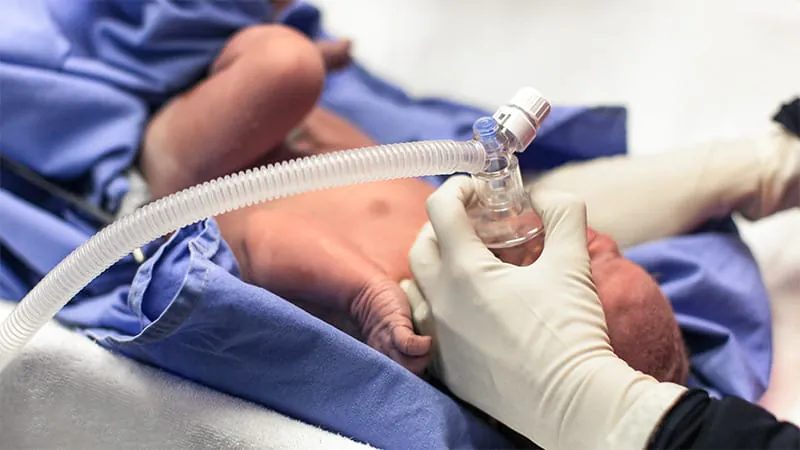
The pressure setting on a preemie's breathing support at birth may matter more than previously thought. A new study found that the guideline-recommended lower pressure (PEEP of 6 cmH2O) was linked to significantly higher odds of needing intubation, lung disease, and eye complications compared to a higher pressure setting (PEEP of 10 cmH2O) — without any added risk of air leaks.
When premature babies need breathing support right after birth, the pressure setting used may have lasting consequences. A retrospective study of 718 preemies born before 32 weeks at a German neonatal center found that the currently recommended lower positive end-expiratory pressure (PEEP) of 6 cmH2O was associated with significantly worse outcomes compared to the higher PEEP of 10 cmH2O used under a prior protocol.
While both pressure settings produced similar oxygen levels at 5 minutes after birth, the lower-pressure group fared worse across multiple downstream outcomes — needing more invasive interventions and longer respiratory support during their NICU stay.
By the Numbers:
Why it matters: Current European resuscitation guidelines recommend the lower PEEP setting, but this study challenges that standard. Randomized controlled trials are underway to confirm the findings — and the results could reshape how clinicians approach the very first breaths of a premature infant's life.