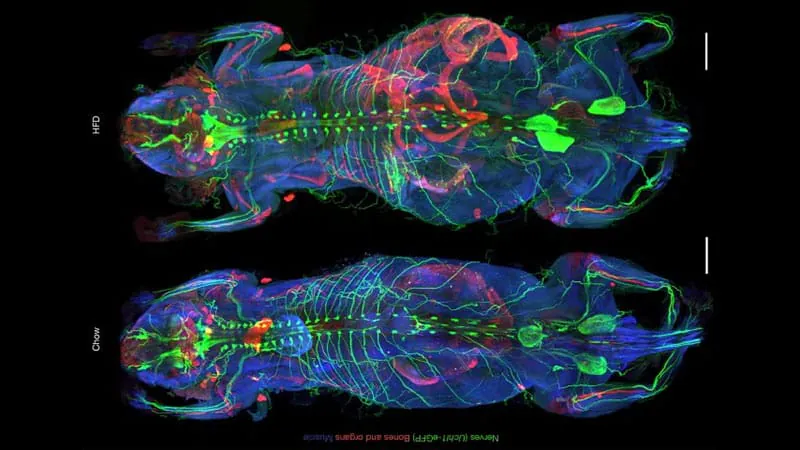
A new AI imaging system called MouseMapper has uncovered surprisingly widespread nerve damage in obese mice — including a ~60% loss of nerve endings in the trigeminal nerve — that was confirmed in human tissue. The findings suggest obesity-related neuropathy extends far beyond the hands and feet. The discovery also raises new questions about whether GLP-1 drugs protect or further stress peripheral nerves.
Researchers at Helmholtz Munich have developed an AI imaging system called MouseMapper that can scan every nerve, immune cell, and organ in a transparent mouse body simultaneously. Published in Nature, the study found that obesity causes widespread nerve damage well beyond the extremities — most strikingly, a ~60% loss of fine nerve endings in the infraorbital branch of the trigeminal nerve, which governs facial sensation. The main nerve trunk remained intact, pointing to classic "dying-back" degeneration — the same process that strips sensation from diabetic patients' feet.
The molecular analysis revealed over 230 altered proteins in obese mice, including a drop in SERPIN-A family proteins (which normally shield nerves from inflammatory damage) and a surge in inflammatory and cytoskeletal remodeling signals. Critically, similar pathway disruptions were confirmed in postmortem human trigeminal tissue from overweight individuals, lending the mouse findings meaningful translational weight.
Key Takeaways:
Why it matters: With GLP-1 drugs prescribed to tens of millions, understanding their full neurological impact — protective or harmful — is urgent. This tool offers a first-ever whole-body view of nerve health, potentially revealing damage that has gone undetected simply because there was no way to look.