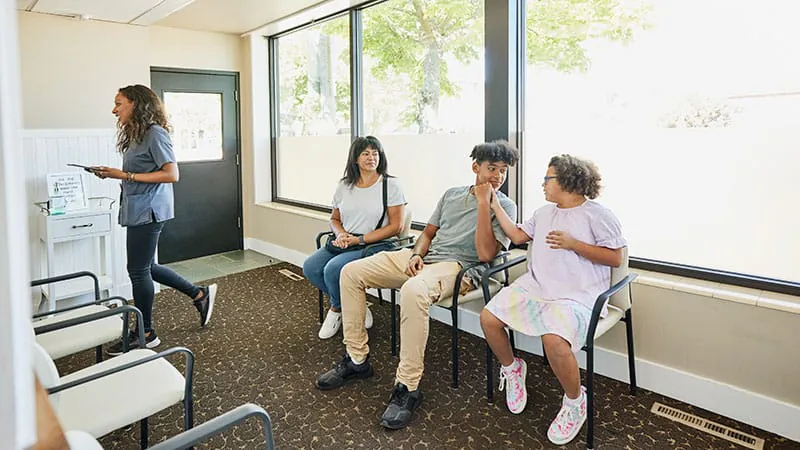
More social needs screening in pediatric primary care didn't lead to more families actually enrolling in community resources, a new study in Pediatrics found. The WE CARE trial across 18 practices in 14 states showed that while more parents discussed social needs and received referrals, resource enrollment rates were nearly identical between intervention and usual care groups. Experts say the gap between screening and real-world help reflects deeper systemic barriers.
A new study published in Pediatrics raises important questions about a widely adopted pediatric care practice: screening families for social needs like food insecurity and housing instability. The WE CARE trial — a stepped wedge cluster trial spanning 18 private pediatric practices across 14 states — found that while the intervention boosted conversations about social needs and referrals, it did not meaningfully increase families' enrollment in community-based resources.
The study enrolled 1,882 parents of children aged 2 months to 10 years. Parents in the WE CARE arm were more likely to discuss social needs with their child's clinician and receive at least one referral — but at the 3-month follow-up, enrollment in new community resources looked virtually the same across both groups.
Experts point to a familiar set of culprits: overstretched community organizations, families already overwhelmed by competing demands, and fragmented data systems that make cross-platform referrals difficult to execute.
Key Takeaways:
Why it matters: As social needs screening becomes standard in pediatric care, this study is a reality check — screening alone isn't enough. Without addressing structural gaps in the social safety net and improving care coordination, even well-designed interventions may fall short of connecting families to the help they need.