The SAFER-TAVI trial found that using the radial artery instead of the contralateral femoral artery for secondary access during TAVI significantly cuts bleeding and vascular complications at that site. The tradeoff? More radiation exposure and a higher rate of needing to switch access sites. Experts say the data should shift practice, though change may be slow — just like it was for radial PCI.
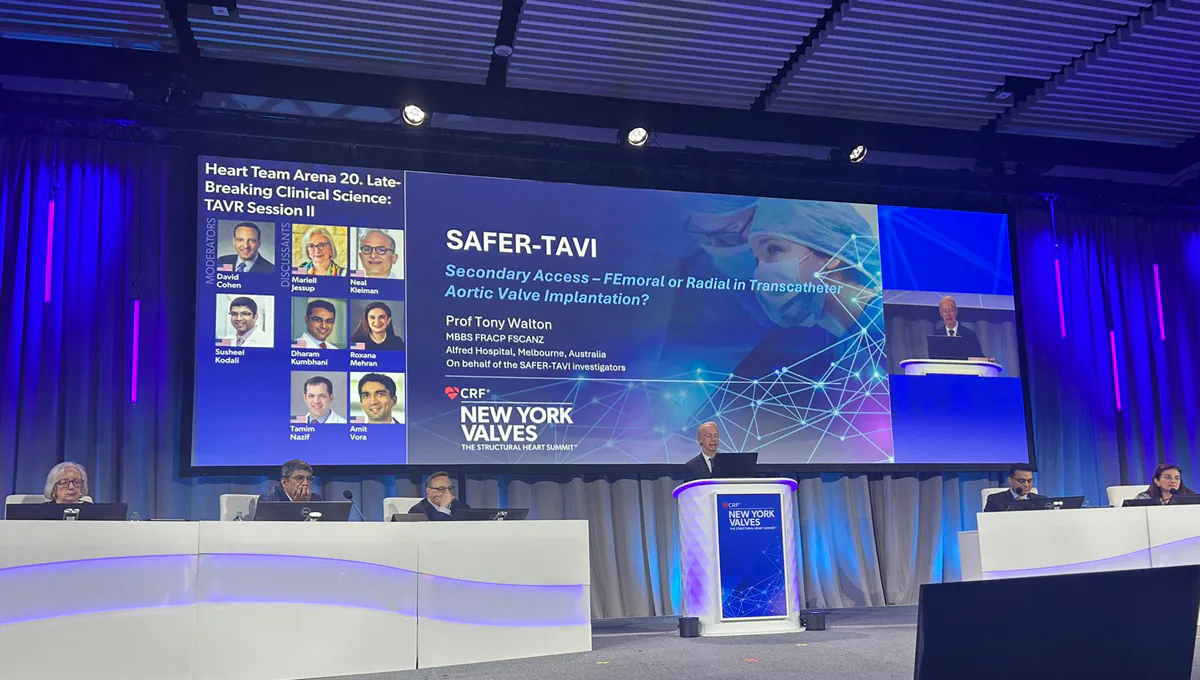
The SAFER-TAVI trial has a clear message for interventional cardiologists: when it comes to secondary access during transcatheter aortic valve implantation (TAVI), the radial artery is the safer bet. Presented at New York Valves 2026, the trial showed that transradial secondary access dramatically reduced bleeding and vascular complications at the secondary site compared to the traditional contralateral femoral approach.
That said, radial access isn't without its downsides. Operators saw significantly higher radiation exposure, a greater need to convert to an alternate access site, and occasional inability to complete a post-procedure angiogram of the primary site. Still, commentators like Dr. David Cohen argue the benefits outweigh the costs — and that long catheters can handle most bailout scenarios through the radial route.
By the Numbers:
Why it matters: Most TAVI operators are still defaulting to femoral secondary access — a show of hands at the session confirmed it. SAFER-TAVI gives clinicians the RCT-level evidence needed to reconsider that habit, though as Dr. Cohen noted, it took two decades for radial PCI to cross the 50% threshold in the U.S.