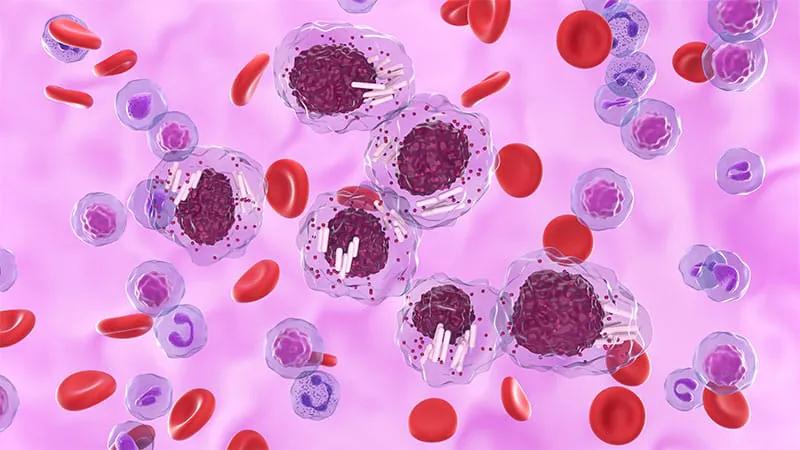
A phase 3 trial shows a venetoclax-obinutuzumab combo leaves fewer detectable cancer cells than standard chemo in untreated CLL patients. In the CRISTALLO trial, 81.3% of patients on the combo achieved undetectable minimal residual disease (MRD) vs. 54.7% on chemoimmunotherapy. The results reinforce venetoclax-obinutuzumab as a powerful first-line option for fit CLL patients.
A new phase 3 trial is making a strong case for venetoclax-obinutuzumab as the go-to first-line treatment for fit patients with chronic lymphocytic leukemia (CLL). The CRISTALLO trial compared this fixed-duration combo against standard chemoimmunotherapy regimens — fludarabine, cyclophosphamide, and rituximab (FCR) or bendamustine-rituximab (BR) — in 166 previously untreated patients without high-risk genetic mutations.
The results were striking: venetoclax-obinutuzumab left far fewer detectable cancer cells behind, a key marker tied to better long-term outcomes. While progression-free survival data are still maturing, the depth of response seen here aligns with and extends findings from the earlier GAIA-CLL13 trial.
By the Numbers:
Why it matters: Undetectable MRD is strongly linked to longer progression-free and overall survival in CLL. These results validate venetoclax-obinutuzumab as a superior option for clearing residual disease compared to traditional chemo, potentially reshaping first-line treatment standards for fit CLL patients.