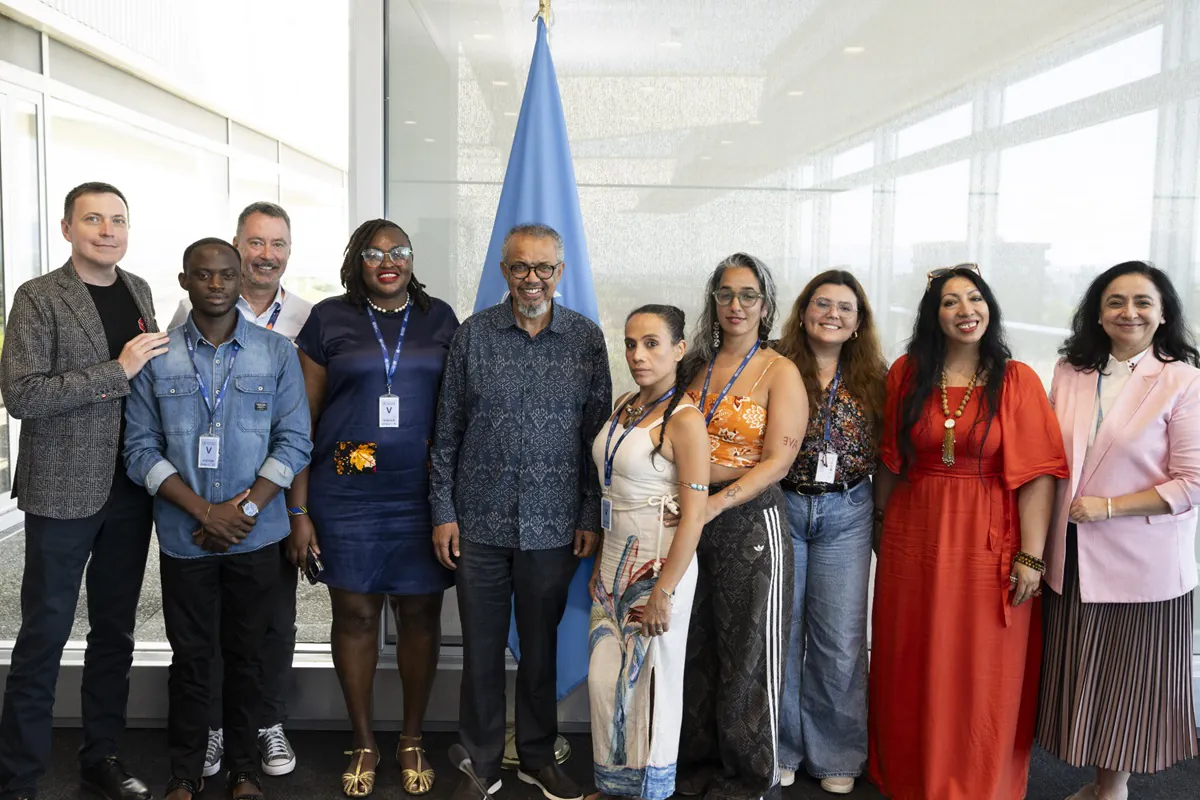
WHO Director-General Dr. Tedros Adhanom Ghebreyesus met with HIV community leaders in Geneva, pledging to put communities at the center of the global HIV response. Leaders called for meaningful involvement in governance, policy, and accountability — not just consultation. Human rights protections and fighting stigma and criminalization were also key priorities raised during the meeting.
WHO Director-General Dr. Tedros Adhanom Ghebreyesus sat down with HIV community leaders in Geneva on the sidelines of the UNAIDS Programme Coordinating Board (PCB) meeting, sending a clear signal: communities aren't just stakeholders — they're essential partners. Dr. Tedros opened by saying WHO wanted to listen first, acknowledging that those on the frontlines of the HIV response bring irreplaceable knowledge and leadership.
Community leaders stressed that any reforms to the global HIV response must genuinely strengthen — not sideline — community roles. Their asks included real seats at the table in governance, policy development, implementation, and accountability, as well as stronger community-led monitoring systems that better reflect lived experiences.
Human rights were a recurring theme, with participants calling out stigma, discrimination, and criminalization as persistent barriers to an effective response. Dr. Tedros reaffirmed WHO's commitment to expanding community engagement, including through the WHO Civil Society Commission.
Key Takeaways:
Why it matters: With global HIV funding under pressure and reform debates intensifying, centering community leadership could be the difference between policies that look good on paper and ones that actually work on the ground.