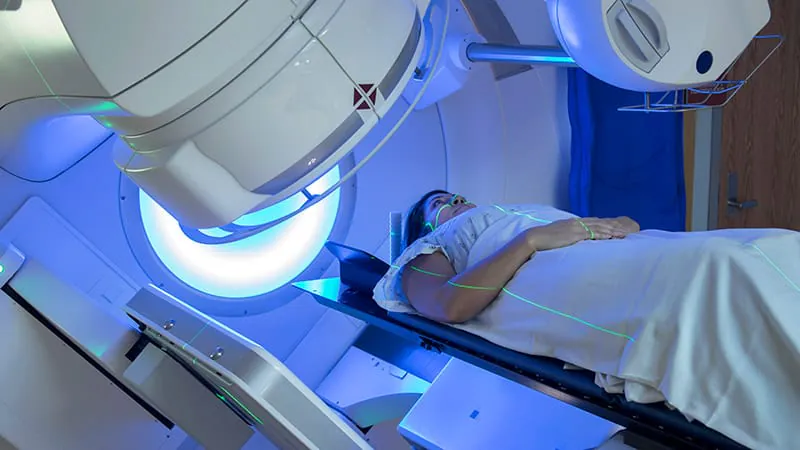
For breast cancer patients receiving radiotherapy, measuring radiation dose to the left anterior descending (LAD) coronary artery is a better predictor of long-term cardiac risk than the commonly used mean heart dose. A large cross-sectional study found that a maximum LAD dose of 12 Gy was a key threshold, and that breath-hold techniques dramatically improved the proportion of patients staying under it. Researchers say it's time to make LAD-specific dosing a standard part of treatment planning.
When it comes to protecting the heart during breast cancer radiotherapy, not all dose metrics are created equal. A cross-sectional study of nearly 5,000 breast cancer patients found that maximum radiation dose to the left anterior descending (LAD) coronary artery — not the widely used mean heart dose — is the stronger predictor of long-term cardiac events like heart attacks, arrhythmias, and heart failure.
The study, published in JAMA Oncology, followed patients treated between 2008 and 2018 at a Calgary cancer center over a median of 10.8 years. Researchers used AI-based segmentation to reconstruct radiation dosimetry from CT plans and identified 12 Gy as a clinically meaningful LAD dose threshold. Patients with left-sided breast cancer who exceeded this threshold had an 81% higher cardiac risk, while mean heart dose showed no significant association at all.
Key Takeaways:
Why it matters: Millions of breast cancer survivors have received chest radiation, and cardiac toxicity remains a serious long-term concern. Shifting to LAD-specific dose objectives — and auditing them as part of routine quality assurance — could meaningfully reduce preventable heart disease in this population.