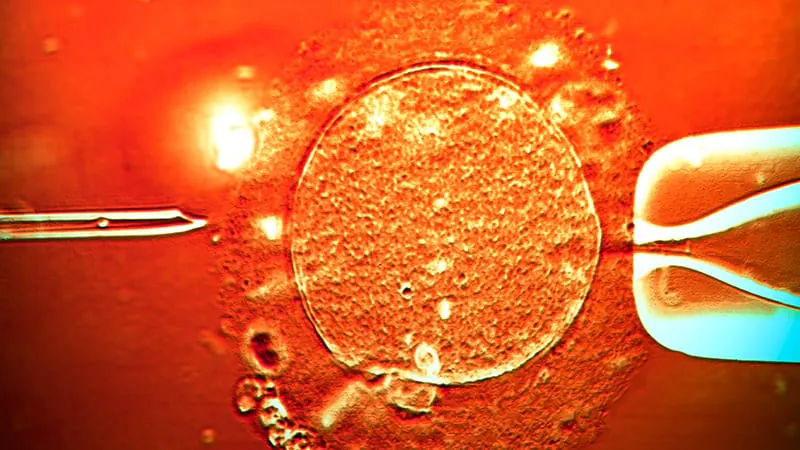
A new study reveals that microtubules — not just actin filaments — play a critical role in connecting egg cells to their surrounding support cells in the ovary. Researchers found that a protein called Camsap3 stabilizes these microtubules, and without it, female mice became completely infertile. The findings could open new doors for diagnosing and treating human infertility.
For decades, scientists believed that the tiny cellular bridges connecting egg cells (oocytes) to their surrounding granulosa cells — called transzonal projections (TZPs) — were primarily made of actin filaments. A new study from researchers at Waseda and Kyoto University is reshaping that understanding.
Using super-resolution microscopy, the team found that more than 80% of TZPs actually contain both microtubules and actin. They also discovered that a microtubule-stabilizing protein called Camsap3 is essential for keeping these structures intact. When Camsap3 was knocked out in mice, the TZPs fell apart, communication between the oocyte and granulosa cells broke down, and the female mice became completely infertile — despite having normal hormone cycles.
Key Takeaways:
Why it matters: This research reshapes our understanding of how eggs mature in the ovary and pinpoints a new molecular target — Camsap3 — that could inform future infertility diagnostics and treatments, as well as improve lab-based egg culture systems used in assisted reproductive technologies.