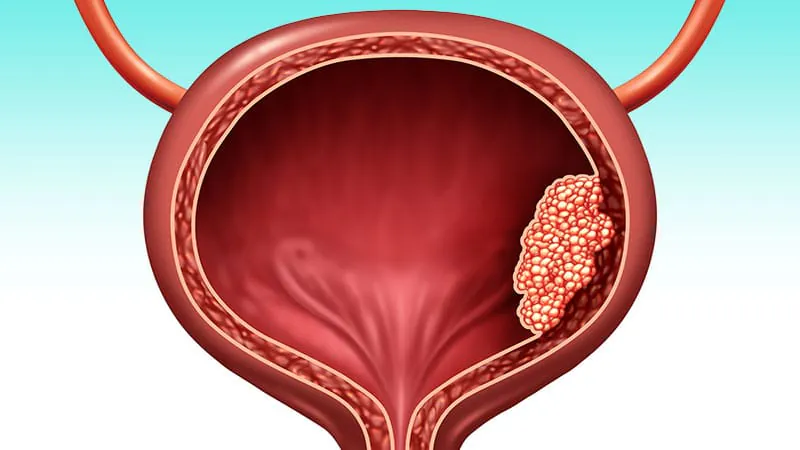
New therapies are reshaping how doctors approach muscle-invasive bladder cancer (MIBC). The drug combo enfortumab vedotin plus pembrolizumab (EV/P) is achieving pathologic complete response rates of ~60% — double the traditional 30% with chemotherapy — sparking serious debate about whether more patients can safely skip bladder removal. The field is still data-limited, but trials are underway and optimism is growing.
Bladder preservation in muscle-invasive bladder cancer (MIBC) may be on the cusp of a major shift. For decades, the gold standard for eligible patients has been trimodal therapy (TMT) — maximal tumor resection followed by chemoradiation — with bladder removal (cystectomy) reserved for recurrence. About half of patients are alive with their bladder intact at 5 years, and that number hasn't budged much — until now.
The game-changer? Enfortumab vedotin plus pembrolizumab (EV/P). The combination is achieving pathologic complete response rates of roughly 60% in the neoadjuvant setting, compared to ~30% with traditional chemotherapy. That's prompting oncologists to ask a bold question: if the tumor is gone, does the bladder really need to come out? The answer isn't clear yet — there's no long-term data — but trials are being designed to explore adding EV/P to TMT and to better identify which patients are truly disease-free.
Key Takeaways:
Why it matters: For patients, keeping their bladder means preserving quality of life. For clinicians, the challenge is knowing when it's truly safe to do so. Better molecular tools and higher response rates could soon make bladder preservation a realistic option for a much broader group of MIBC patients.